
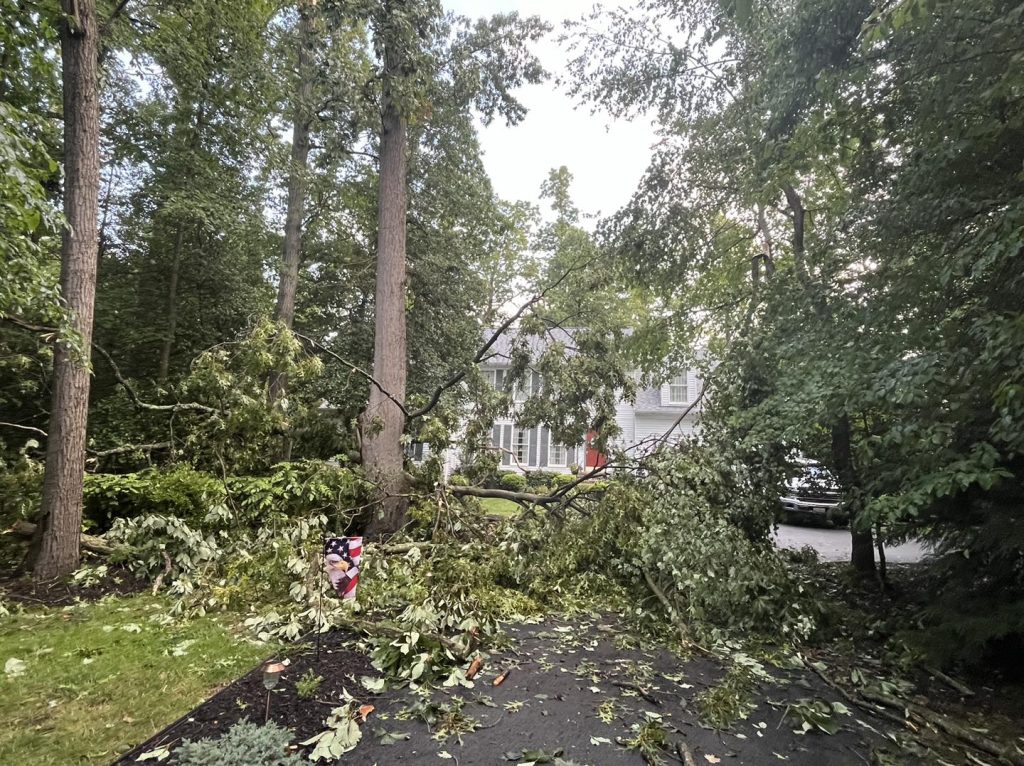
Spring in Central Maryland has a way of sneaking up on people. One week the yard is half asleep, and the next everything is greening up, growing fast, and getting hit with strong rain, gusty wind, and the kind of spring storms that remind you just how close those branches really are to the house.
That’s why spring storm prep is not only about stocking batteries and checking the weather. It’s also about looking up. Trees that seemed fine through winter can start showing new warning signs once the season changes. Limbs that made it through snow and cold may not be ready for wet spring foliage and strong wind. Trees with hidden decay, crowded canopies, or root problems can become a much bigger risk once storm season ramps up.
The good news is that a little attention now can go a long way toward reducing the chance of broken limbs, property damage, and emergency cleanup later.
Why spring storms are hard on trees in Central Maryland
Spring weather is rough on trees for simple reasons. Conditions change quickly. The ground can stay saturated after repeated rain. Winds pick up. Trees begin pushing new growth. Limbs get heavier. Small defects become more impactful when the canopy starts filling in again.
In our area, that combination can pack a punch. A tree that has a little deadwood, a weak branch attachment, or a root system stressed by wet soil may hold together through winter and struggle or fail once spring storms arrive. That is why this is such a useful time of year for homeowners to perform or schedule a tree checkup.
Start with the obvious warning signs
Some storm risks are not subtle. If you can see them from the ground, they deserve attention.
Look for:
- Dead limbs in the canopy
- Branches hanging over the roof, driveway, or high-use areas
- Cracks in large limbs or the main trunk
- Mushrooms or fungal growth near the base
- A tree that has started leaning more than it used to
- Soil lifting or cracking near the roots
- Limbs rubbing against each other or against the house
If you notice one of these issues, that doesn’t always mean removal is necessary. It does mean the tree deserves a closer look.
Don’t overlook the canopy
One of the biggest spring storm mistakes homeowners make is focusing only on what is happening at eye level. The upper canopy often tells the real story. Deadwood, overextended limbs, and poor branch structure may not be obvious until leaves start returning or wind moves the canopy around.
A tree with too much weight on one side can become especially vulnerable during spring storms. So can trees with dense growth that catches more wind than a properly thinned canopy would. Strategic trimming can improve airflow, reduce excess weight, and lower the chance of limbs failing over the house or yard. Contact us for Tree Trimming.
Root problems are more than many homeowners realize
Not every dangerous tree looks damaged above ground. Roots play a major role in storm readiness, especially during wet weather. When soil stays saturated, root stability can change fast. Trees that already have compromised roots from age, disease, old construction damage, or poor planting location may become less stable when the ground softens.
That is why a new lean, exposed roots, or cracking soil near the base should not be ignored. In many cases, the most serious storm risk is not a branch failure. It is the possibility of the whole tree shifting or uprooting.

Some trees need pruning, some need removal
Not every tree problem leads to removal. In fact, many storm concerns can be improved with thoughtful trimming and proactive maintenance. Removing deadwood, reducing long overextended limbs, and improving overall canopy structure can make a tree safer and healthier going into storm season.
At the same time, some trees are no longer good candidates for preservation. If a tree is badly decayed, severely leaning, storm-damaged from a prior event, or planted too close to a structure for its size and condition, removal may be the safer long-term choice. Check out our Tree Removal services.
Spring is the right time to think ahead
Storm prep is not just about the tree that worries you today. It is also about the trees that could become bigger issues over the next few years.
Some smart tree care questions to ask:
- Is this tree growing too close to the house?
- Has it been years since it was last professionally trimmed?
- Do large limbs extend over spaces people use often?
- Has the tree shown signs of decline or stress?
- Would a storm make this tree a target for property damage?
If the answer to any of those is yes, it is worth getting ahead of the problem while you still have options.
Do not wait until after the first major storm
Emergency work is sometimes unavoidable, but it is rarely the most convenient or least expensive time to deal with a tree issue. Once a branch is on the roof or a tree is across the driveway, the question is no longer what should be done. It is what can be done right now, under pressure.
A spring inspection gives you more control. It gives you time to make a smart decision, schedule work safely, and reduce the chance that your first storm of the season turns into a cleanup emergency.
Nevertheless, sometimes emergencies happen. As Central Maryland’s tree service experts, we at The Tree People are here for you when you need us. Call us for Emergency Tree Service.
Get your trees ready for spring storms now
If you are unsure whether your trees are ready for spring storm season, this is the right time to find out. A professional evaluation can help you spot risks early, decide whether trimming is enough, and determine when removal is the safer option.