
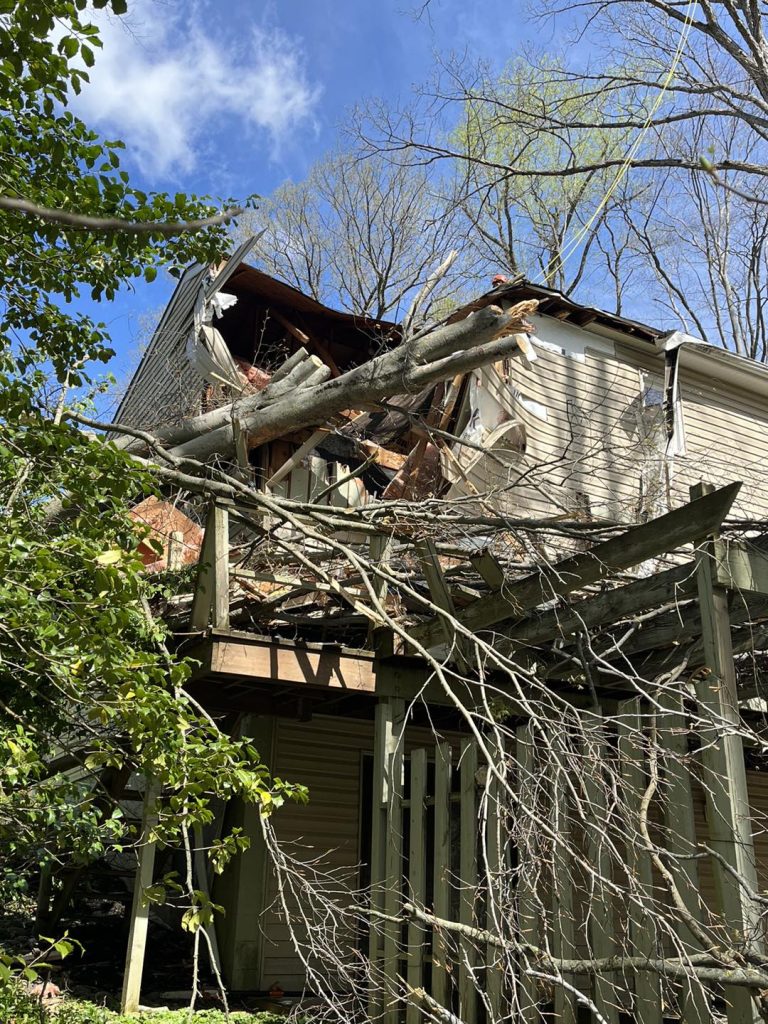
Most trees that worry homeowners are not actually dangerous. They might be messy, overgrown, or they’ve grown bigger than expected. A truly dangerous tree is different. It is a tree with a serious defect, a high chance of failure, and something important to you, like your home, driveway, fence, or a favorite leisure spot, in the path of a potential fall.
If you are trying to decide whether a tree is dangerous and a real hazard, or just an annoyance, the signs below are a solid starting point. This advice is not meant to replace a professional assessment, but can help you know some of the signs of when it is time to stop watching and call that professional.
If you want an expert opinion quickly, The Tree People provide professional tree removal throughout Central Maryland.
Danger depends on defects and targets
A tree can have problems and still not be a meaningful risk if it is far from anything it can damage. On the other hand, a tree that looks fine can become dangerous if it is leaning toward your house or growing over a frequently used area. When you are evaluating danger, ask yourself two questions:
- Is there a defect that could cause a limb or the whole tree to come down?
- If it falls, what can it hit?
That combination is what turns a defect into a hazard.
Sign 1: The tree is newly leaning, or the lean is getting worse
Many trees have a slight natural lean. The red flag is a lean that is new, sudden, or increasing over time. After heavy rain, wind, or ground disturbance, a tree that begins to tip can be telling you its roots are no longer holding like they should. If the lean points toward your home, driveway, or street, it is time to treat it as urgent.
Sign 2: The ground near the base is heaving, cracking, or lifting
The root plate is the tree’s anchor. When it starts to move, the soil often shows it. Watch for fresh cracking in the ground, lifted soil, or gaps forming near the base. These signs often show up after storms or saturated soil conditions and can indicate the tree is partially uprooting.
Sign 3: Large dead branches, especially in the upper canopy
Dead wood is one of the most common reasons branches fall. If you see large limbs with no buds, no leaves during the growing season, or brittle branches dropping regularly, take it seriously. Dead limbs over a roofline, play area, or parking spot are not a problem best saved for later. They are a hazard to address before the next storm.
Tree trimming can sometimes reduce risk, but if the tree is in steep decline or the dead wood is widespread, removal may be the safer route.
Sign 4: Cracks, splits, or seams in the trunk or major limbs
A crack can be a warning sign of structural failure, especially if it is deep, long, or located where a large limb joins the trunk. Trees can sometimes live with old scars, but a fresh split or a crack that appears after wind or ice can indicate a serious weakness. If the crack is widening, or if you see separation, treat it as a high-risk issue.
Sign 5: Fungal growth, conks, or mushrooms near the base or on the trunk
Fungi are not always a death sentence, but they are often a clue. Conks and mushrooms can indicate internal decay, especially when they appear around the base, root flare, or on major structural wood. Decay weakens the tree from the inside, which means the tree can look normal while losing its ability to support its own weight.
Sign 6: Major bark loss, cavities, or hollow areas
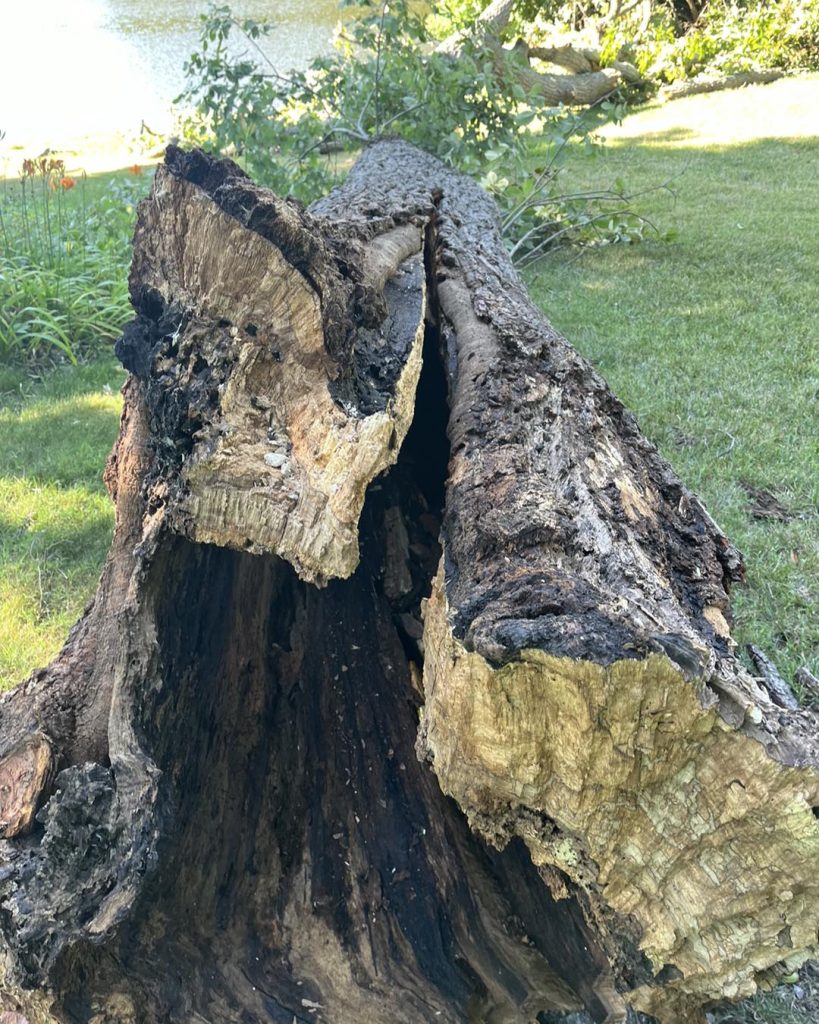
Missing bark, large cavities, and hollow-sounding trunks can all point to decay or structural weakness. Some trees can live with cavities, but the question is whether the remaining wood can still support the load. If the cavity is large, near the base, or paired with a lean or canopy dieback, it is often a sign the tree is past the point of simple pruning.
Sign 7: Root damage from construction, trenching, or severe soil changes
Roots do more than feed the tree. They stabilize it. When roots are cut, crushed, or heavily compacted by equipment, the tree can become more likely to fail, sometimes months or even years later. A tree near a new driveway, sidewalk replacement, grading work, or utility trenching deserves a closer look. If more than a minor portion of the root system is compromised, removal may be safer than waiting for the next wind event to make the decision for you.
What to do if you spot one of these signs
If the tree is near power lines, do not approach it and do not attempt cleanup yourself. Call your utility provider first, then call a professional. If the tree is blocking access, resting on a structure, or actively shifting, treat it as an emergency.
The Tree People provide 24/7 Emergency Tree Services across Anne Arundel, Howard, Montgomery, Prince George’s, and Baltimore Counties.
When removal is the right call, do it before the storm chooses for you
Many removals happen because homeowners waited until the tree was fully dead or until the weather did the final push. A proactive removal is often safer, simpler, and less stressful than an emergency job during storm conditions.
If you want a professional opinion on a tree that seems questionable, get in touch with us for a no-obligation estimate.
Contact Us
Learn more from trusted sources: