
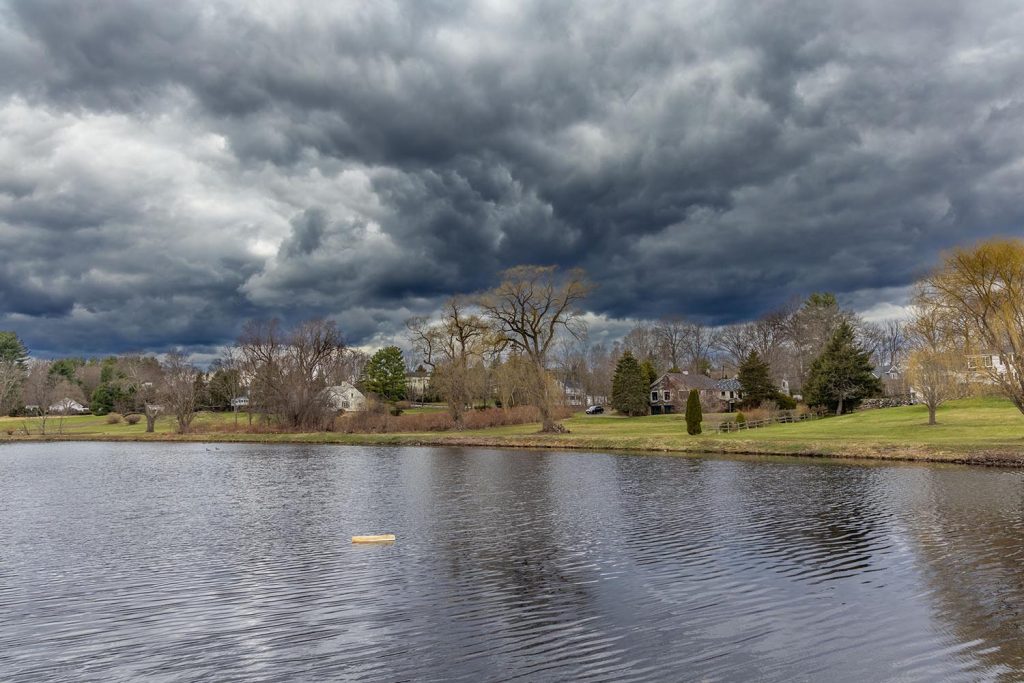
Once a nor’easter moves out of Central Maryland, the first look around the yard can be reassuring. The house is standing, the power is on, and none of the trees are lying across the driveway. It is tempting to assume everything made it through just fine.
Give the trees another look.
Strong winds, prolonged rain, and saturated ground can all weaken trees without bringing them down immediately. A branch may crack but remain suspended in the canopy. Roots can shift enough to reduce stability without pulling completely out of the ground. Damage around a branch union may not become obvious until the tree begins moving again in the next round of wind.
The hours and days after a major storm are a valuable time to look for changes that weren’t there before.
Look for New Leaning or Changes at the Base of the Tree
Some trees naturally grow at an angle and remain perfectly stable for decades. What matters after a storm is any change.
If a tree that previously stood straight is suddenly leaning, or an existing lean appears more pronounced, take a close look at the ground around it from a safe distance. Raised soil, cracks in the ground, newly exposed roots, or a visible gap between the trunk and surrounding soil can indicate movement in the root system.
Nor’easters can bring extended periods of rain that leave soil saturated. Wet soil provides roots with less resistance against strong wind, making root movement and uprooting a greater concern.
A newly leaning tree near a house, road, driveway, or frequently used part of the yard warrants prompt professional attention.
Check the Canopy for Broken or Hanging Branches
The results of storm damage are not always found lying on the ground.
Broken limbs can remain lodged high in a tree, supported temporarily by neighboring branches. From below, they may blend into the canopy and be difficult to recognize. Look (from a safe distance) for branches hanging at an unusual angle, fresh pale wood where a limb has split, or sections of the canopy that suddenly look uneven.
Large hanging branches are particularly dangerous because their remaining attachment can fail without much warning. Avoid walking or parking beneath them, and do not attempt to pull them down from the ground.
Tree trimming information here
Watch for Fresh Cracks and Splits
The point where two large stems or branches meet can experience tremendous force during high winds. A nor’easter may open a crack that was previously small or create a new split entirely.
Fresh cracks often reveal lighter-colored wood beneath the bark. You may also notice a seam that appears wider than before or two sections of the tree beginning to pull apart.
Pay particular attention to cracks in the main trunk, large scaffold limbs, and major branch unions. These portions of the tree carry substantial weight. A compromised connection can become considerably more dangerous once spring or summer foliage adds additional load to the canopy.
A Tree Can Survive the Storm and Still Be Weakened
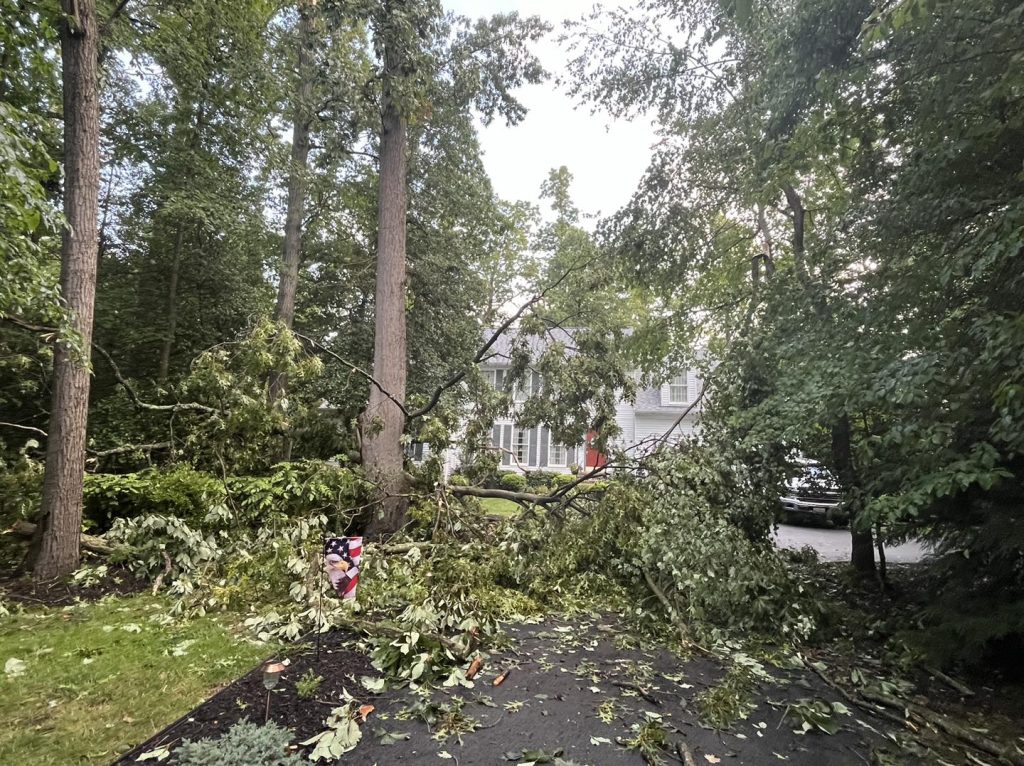
One reason post-storm inspections matter is that tree failure is not always immediate. Wind can twist branches without breaking them completely. Roots can shift underground without becoming visible. A partially damaged limb may continue producing leaves even though its structural attachment has weakened.
During the days following a nor’easter, watch for changes such as drooping branches, newly exposed wood, sections of canopy that move differently in the wind, or branches beginning to sag lower than they did before the storm.
Comparing the tree with how it normally looks is useful. Homeowners who see their trees every day often notice subtle changes that would be difficult for someone else to recognize at first glance.
Saturated Soil Deserves Attention After Heavy Rain
The trunk and canopy tend to receive most of the attention after a storm, but some of the most important activity may be happening underground.
Roots anchor the tree. When soil becomes saturated for an extended period, that anchoring system can become less secure. Trees growing on slopes, trees with previous root damage, and trees standing in areas where water collects may deserve additional scrutiny following a major rain event.
Walk the property only when conditions are safe and look for disturbed soil around the root flare. Fresh mounding on one side of the tree, depressions on the other, or roots that appear to have lifted can signal movement.
Avoid standing directly beneath a tree that appears unstable while you inspect it.
Previous Problems Can Become Bigger Problems
Storms often expose weaknesses that were already present, such as: decay, old pruning wounds, cavities, dead branches, damaged roots, and weak branch attachments. These problems may have existed for years before severe weather placed enough stress on them to become noticeable. A mature tree that has weathered dozens of previous storms is not always prepared for the next one, particularly if its condition has changed with age.
Fungal growth around the trunk, areas of missing bark, hollow sections, recurring deadwood, and older cracks all deserve more attention when they appear alongside fresh storm damage.
Sometimes careful pruning can address the affected portions while preserving the tree. Severe structural damage, extensive decay, or loss of root stability may make removal the safer choice.
Give Storm-Damaged Trees Some Space
Chainsaws and ladders are a particularly dangerous combination around storm-damaged trees. Limbs can be under tension, trunks may have shifted, and branches that appear firmly caught can move when another piece is cut.
Power lines add another level of danger. Treat any tree or limb touching a utility line as an electrical hazard and stay away from it. Contact the utility provider rather than attempting to clear the area yourself.
If a tree has fallen onto a structure, is blocking access, has developed a severe lean, or has large broken limbs hanging overhead, professional emergency service may be appropriate.
Emergency Tree Service information here
What Should You Do With Storm-Weakened Trees?
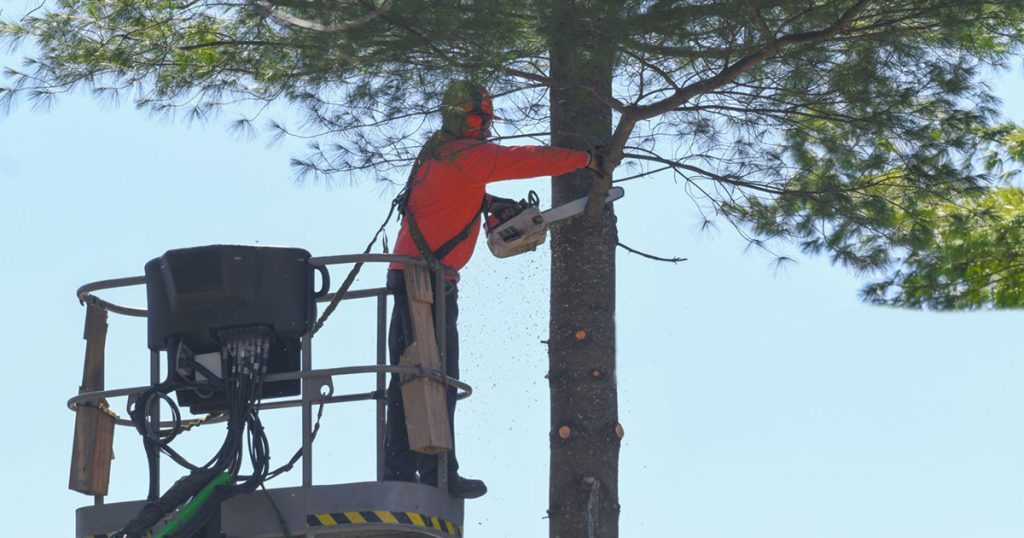
There is no single answer for every damaged tree. A broken branch may need nothing more than proper pruning. Another tree may require more extensive work to restore a safer structure. A tree with serious trunk failure, substantial root movement, or widespread decay may no longer be a reasonable candidate to keep.
That decision is easier to make while the tree is still standing and the property is safe.
After a nor’easter passes through Central Maryland, take a few minutes to look at your trees as carefully as you look at your roof, gutters, and siding. If something has shifted, cracked, broken, or simply looks different than it did before the storm, The Tree People can help determine what comes next.
Learn more about storm damage from the University of Maryland Extension