

Planting a tree is one of the most satisfying ways to improve your property. It adds shade, beauty, value, and a sense of maturity to your landscape. Yet one question always comes up before the shovel hits the soil. How close can you plant a tree to your house? The honest answer is that it depends. Tree species, growth habits, soil conditions, weather, and your long term maintenance plans each play an important role in choosing the safest and smartest planting distance.
Why Species Matters More Than Anything Else When You Plant a Tree
Some trees stay compact throughout their lives while others grow into landscape giants. In Central Maryland, many homeowners plant familiar species like Red Maple, White Oak, Eastern Redbud, Dogwood, and Tulip Poplar. Each one has a different mature height and spread, which means the safe planting distance varies.
A Red Maple, for example, can reach seventy feet in height with a canopy that spreads thirty to forty feet or more. Planting it too close to the house invites problems later because branches may stretch toward the roof and roots may spread well beyond the dripline in search of water. A White Oak can grow even larger, often topping eighty feet with a broad crown and a strong root system that travels far from the trunk.
By contrast, an Eastern Redbud or a Flowering Dogwood typically remains much smaller. A mature Redbud often reaches twenty to thirty feet in height with a manageable spread, and a Dogwood stays in a similar range. Smaller trees can typically be planted closer to a structure because their root systems and canopies remain more proportionate.
Height, Branch Spread, and Root Growth
A good guideline is to consider the mature size of the tree and plant accordingly. Larger trees often require twenty to fifty feet of distance from a home. Medium sized trees usually need fifteen to twenty feet. Smaller ornamentals can sometimes be planted ten feet away without issues. These ranges are not strict rules, however. Soil conditions, moisture, and sunlight all influence how vigorously a tree grows.
Branches deserve special attention. A tree with a wide canopy can eventually reach over a roofline even if it was planted at a safe distance initially. This matters most during storms because long branches can snap under heavy wind or ice. Likewise, a deep or aggressive root system can spread far enough to place pressure on sidewalks, driveways, or foundations if planted too close.
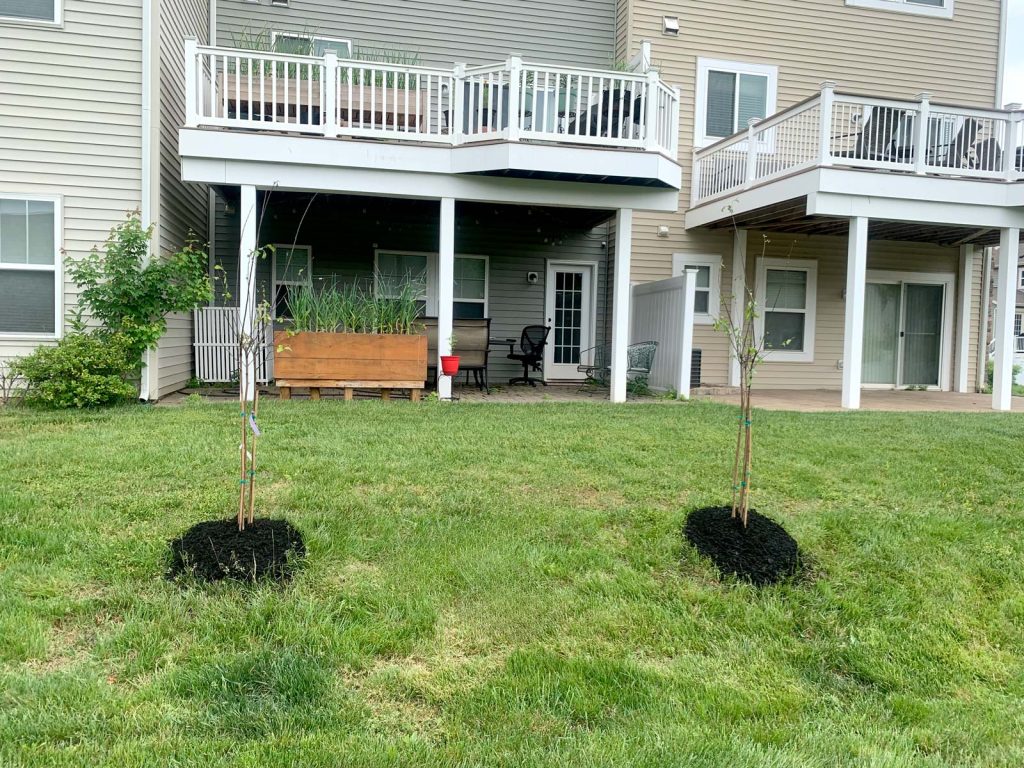
Yard Layout and Local Conditions
Every property is different. A flat yard allows roots and moisture to spread more evenly. A sloped yard directs water toward or away from the house, which changes how roots develop. If your home sits lower than the planting spot, water can pool near the foundation. If it sits higher, roots may stretch farther toward moisture sources.
Maryland weather is another important factor. The region sees a mix of heavy rain, winter freezes, summer heat, and occasional strong storms. Trees that grow too close to a structure can create hazards when high winds arrive. Oaks and Tulip Poplars are strong but can drop heavy limbs. Maples can grow fast and form weaker branch unions if not maintained.
Maintenance Can Change the Equation
If you plan to invest in regular pruning and professional tree care, you may be able to plant a tree slightly closer to your home. Annual trimming keeps branches balanced and reduces weight on the outer canopy. Thinning helps air move through the crown and lowers the risk of storm damage. A well-maintained tree is far safer than a neglected one, even if planted at the same distance.
On the other hand, planting too close with no maintenance plan almost guarantees future issues. The Tree People see this often when homeowners are surprised by how quickly a young tree matures. What began as a harmless sapling becomes a source of roof interference, foundation stress, or repeated storm cleanup.
General Distance Guidelines for Common Maryland Trees
These examples are not absolute rules, but they offer a helpful starting point when planning your landscape.
- Red Maple: Plant thirty to forty feet from the house.
- White Oak: Plant forty to fifty feet away due to size and root strength.
- Tulip Poplar: Plant at least forty feet away.
- Eastern Redbud: Ten to fifteen feet is usually safe.
- Flowering Dogwood: Ten to fifteen feet works well for most yards.
- Eastern White Pine: Plant twenty to thirty feet away depending on intended size.


When In Doubt, Ask a Professional
There is no perfect one size fits all number because every yard and every tree species behaves differently. Soil moisture, light exposure, drainage, and long term care all influence how a tree grows near a structure. If you want a confident answer for your specific property, a professional evaluation is the safest path forward.
The Tree People can walk your yard with you, look at the space you want to plant in, consider the species you prefer, and make a recommendation based on experience with Maryland’s climate and soil conditions.
Learn more about our tree services.
Planting a tree is a long-term investment, and choosing the right distance today can prevent trouble and protect your home for decades to come.